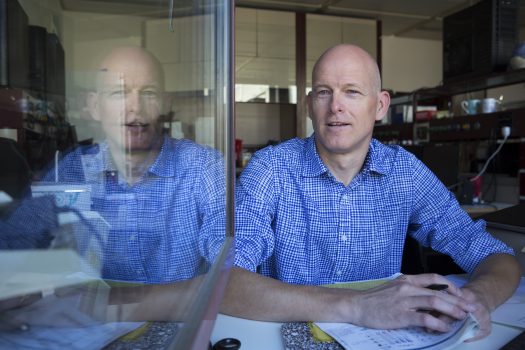
Anthony Holtmaat
Function: Professeur ordinaire
Group name: Structural synaptic plasticity
Group type: Main
Affiliations: Faculty of Medicine, Department of Basic Neurosciences
Domains: Sensory and Motor Systems, Development and Plasticity
Keywords: brain networks, cranial window implants, synapse, synaptic plasticity
Research activities
Our laboratory investigates the anatomy and function of neocortical circuits, and how these are shaped by experience and learning. A central focus is understanding how synaptic plasticity — including the formation, elimination, and strengthening of connections between cortical neurons — underlies the brain’s ability to adapt to new sensory experiences and to encode perceptual learning. To address this, we combine a range of complementary techniques. Using in vivo two-photon laser scanning microscopy, we image synapses over extended periods, tracking their structural and functional organization on dendrites and axons in real time as animals undergo sensory learning or experience changes in their environment. These studies are further complemented by correlated light and electron microscopy, which links synapse dynamics with ultrastructure. In vivo and ex vivo electrophysiology and optogenetics allow us to study the interplay between higher-order feedback and lower-order feedforward inputs onto cortical pyramidal cells, and how this interaction drives synaptic integration, dendritic excitability, and long-term potentiation through mechanisms such as local dendritic plateau potentials, local regulation of ion channels, and disinhibitory circuits. Together, these approaches allow us to integrate structural and functional insights into new models of how feedback circuits shape cortical function and plasticity, and guide perceptual learning.
Latest publications
A sensitive orange fluorescent calcium ion indicator for imaging neural activity.
Cortical interlaminar coherence: Recurrence is given, alignment is earned.
Thalamocortical feedback selectively controls pyramidal neuron excitability.
Repetitive Sensory Stimulation Potentiates and Recruits Sensory-Evoked Cortical Population Activity.
Hide the members of the Lab

Prof. Anthony Holtmaat
+41 22 37 95 428
anthony.holtmaat@unige.ch

I-Wen Chen
+41 22 37 95 469
i-wen.chen@unige.ch

Ronan Chereau
+41 22 37 95 469
ronan.chereau@unige.ch

Vaibhav Chippalkatti
+41 22 37 95 445
vaibhav.chippalkatti@unige.ch

Pablo De Chambrier
+41 22 37 95 469
pablo.de-chambrier@etu.unige.ch

Céline Dürst
+41 22 37 95 469
celine.durst@unige.ch

Yeraz Gedik
+41 22 37 95 469
yeraz.gedik@etu.unige.ch

Elodie Husi
+41 22 37 95 445
elodie.husi@unige.ch

Elisavet Mandora
elisavet.mandora@unige.ch

Claudia Morin Raig
+41 22 37 95 469
claudia.morinraig@unige.ch
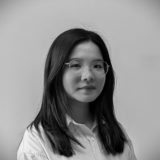
Thao Linh Tran
thao.tran.1@etu.unige.ch

Andrea Valderrama Alvarez
+41 22 37 95 469
andrea.valderramaalvarez@unige.ch

David Van Oorschot
+41 22 37 95 469
david.vanoorschot@unige.ch
Contact
Faculté de médecine
Université de Genève
Email: Anthony.Holtmaat@unige.ch